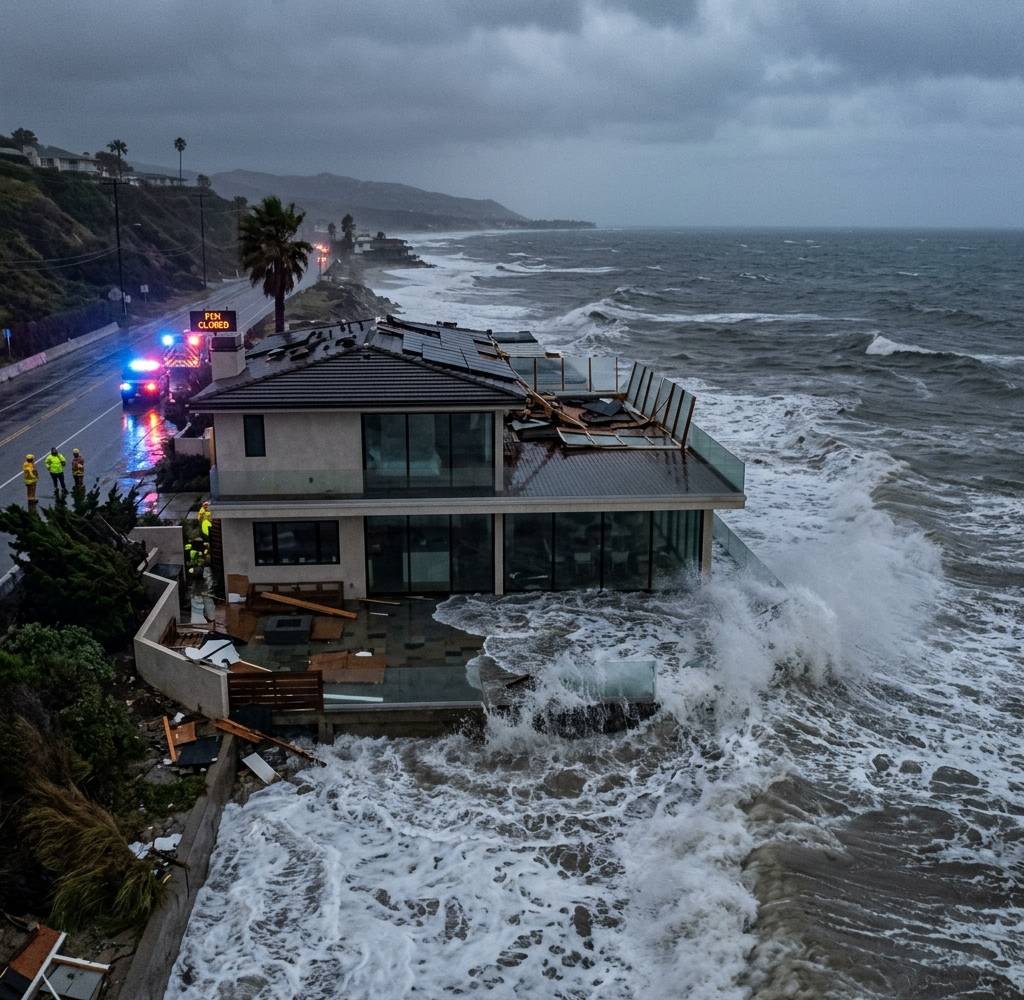
Storm Damage Restoration in Malibu
Talk to a local crew now. Most jobs start the same day you call.
- Water extraction & pump-out
- Structural drying & monitoring
- Mold-safe cleanup
- Insurance-ready photo reports
Pacific winter storms bring compound damage to Malibu — high winds, torrential rain leaks, sea wave surges, and bluff erosion simultaneously. We serve the Malibu area for structural shoring, tarping, and water damage restoration.
What Our Storm Damage Service Includes
We coordinate across roofing, water damage, structural shoring, and restoration as a single-source contractor.
Immediate Emergency Structural Stabilization
When an El Niño storm hits Malibu, a single property can suffer multiple breaches. Wind rips roof shingles, allowing rain water to flood ceiling plenums, while storm surge floods the ocean-side foundation piers. Our team carries heavy-duty shoring jacks, structural board-up lumber, and high-tensile tarps to secure your property quickly.
- Emergency Roof Tarping & Window Board-Up: Protection from wind-driven rain leaks to secure the property envelope.
- Storm Surge Sand & Salt Flush: Shoveling out sand and silt from beachfront foundations, followed by freshwater rinses to help prevent corrosion.
- Structural Shoring & Bluff Stabilization Support: Installing structural jacks to support beach decks or pier foundations damaged by wave action.
- Full Interior Water Damage Restoration: Extraction, psychrometric structural drying, and reconstruction of architectural finishes.
Emergency storm gear includes high-capacity hydraulic jacks, hurricane tarps and structural plywood, gas-powered trash pumps, negative air HEPA scrubbers, and heavy-duty mobile power generators.
Why Beachfront Properties on PCH Face Extreme Compound Risks
Winter storms hit Carbon Beach, Malibu Colony, and Broad Beach with wave runup forces that standard construction often cannot handle.
During major El Niño storm events, astronomical high tides (King Tides) combine with high-velocity Pacific winds. The ocean waves crash directly beneath the floorboards of homes on beachfront stilts and piers. If storm swells breach glass facades or exterior sea walls, ocean saltwater can flood the ground floors, leaving layers of corrosive sea salt, heavy sand, and debris behind.
We coordinate the recovery across the Malibu area. We stabilize the structural pier foundations, clear out heavy ocean sand, rinse with fresh water to help prevent salt corrosion, and rebuild glass panels and cedar siding to coastal engineering codes.
The Bluff Erosion Danger
Malibu properties perched on coastal bluffs (such as Point Dume or the Mesa bluffs) face secondary structural danger. Torrential storm rain saturates clay soils, triggering localized mudslides and bluff failures. If your hillside deck or home shows signs of concrete cracks, soil gaps, or doors that suddenly stick during a major rain storm, prompt structural stabilization is important to protect the property. We work with your insurance company and document the damage for your claim.
Insurance Claims Assistance
Standard homeowners insurance policies exclude water damage from wave surges and ocean flooding, but usually cover damage from wind-driven rain leaks through roof failures or shattered window glass. We prepare detailed, line-item itemized dry logs and engineering reports to help your claims adjuster separate wind damage from flood surge for your claim.
Frequently Asked Storm Damage Questions
Does standard homeowners insurance cover beachfront storm surge?
No. Standard policies exclude damage caused by rising ocean water, storm surge, or wave action. However, damage caused by wind-driven rain entering through a roof breach or broken glass is typically covered. We assist in documenting the exact cause of loss.
What should I do if my beachfront home’s glass panels shatter during a storm?
Evacuate the ocean-facing rooms immediately and secure the doors. Do not attempt to board up a window while waves are actively hitting the house. Call {{phone}} to send an emergency boarding crew once the tide recedes.
How do you stabilize a pier foundation damaged by high tides?
We install heavy-duty hydraulic structural jacks and support posts to reinforce the joists. We then coordinate with coastal structural engineers to execute permanent concrete and steel reinforcement.
How long does storm damage restoration take?
Emergency board-ups and tarps are completed in a few hours. The water extraction and LGR dryout phase takes 3 to 5 days, while structural general contract reconstruction of roof assemblies and glass facades can take 2 to 4 weeks depending on permits.
What is an El Niño preparation sandbag layout?
We install heavy geotextile sandbags along high-velocity beach corridors to deflect waves. We also install heavy plastic vapor barriers to keep rainwater from pooling in foundation clay soils.
Questions people ask before they call
Does standard homeowners insurance cover beachfront storm surge?
No. Standard policies exclude damage caused by rising ocean water, storm surge, or wave action. However, damage caused by wind-driven rain entering through a roof breach or broken glass is typically covered. We assist in documenting the exact cause of loss.
What should I do if my beachfront home's glass panels shatter during a storm?
Evacuate the ocean-facing rooms immediately and secure the doors. Do not attempt to board up a window while waves are actively hitting the house. Call {{phone}} to send an emergency boarding crew once the tide recedes.
How do you stabilize a pier foundation damaged by high tides?
We install heavy-duty hydraulic structural jacks and support posts to reinforce the joists. We then coordinate with coastal structural engineers to execute permanent concrete and steel reinforcement.
How long does storm damage restoration take?
Emergency board-ups and tarps are completed in a few hours. The water extraction and LGR dryout phase takes 3 to 5 days, while structural general contract reconstruction of roof assemblies and glass facades can take 2 to 4 weeks depending on permits.
What is an El Niño preparation sandbag layout?
We install heavy geotextile sandbags along high-velocity beach corridors to deflect waves. We also install heavy plastic vapor barriers to keep rainwater from pooling in foundation clay soils.
Every hour water sits, damage spreads.
Drywall wicks, floors cup and mold can start within a day or two. Call now.