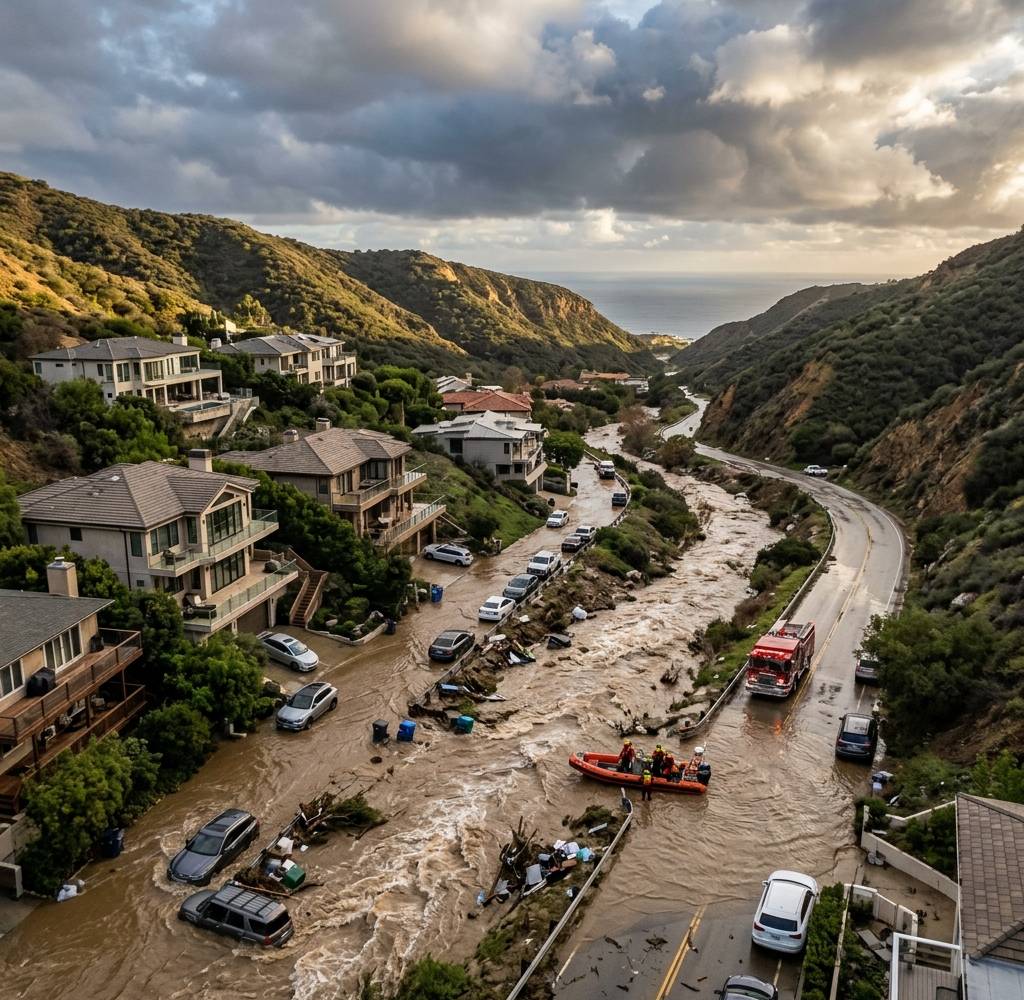
Flood Damage Cleanup in Malibu
Talk to a local crew now. Most jobs start the same day you call.
- Water extraction & pump-out
- Structural drying & monitoring
- Mold-safe cleanup
- Insurance-ready photo reports
Malibu flooding can arrive from multiple directions at once. Pacific storm surges hit Carbon Beach beachfront homes from the ocean, while winter mudslides funnel debris through Las Virgenes Canyon. We serve the Malibu area for heavy mud, sand, and ocean debris cleanup.
What Our Flood Cleanup Service Includes
We provide full-scale biohazard and heavy material clearing. General water damage contractors are often not equipped for the sand, silt, and heavy mud common in Malibu floods.
Silt, Sand, and Debris Removal
When beachfront properties on Broad Beach or Carbon Beach experience wave runup or storm surge, the water brings massive amounts of ocean sand and silt that quickly pack into crawlspaces and ground floors. In the canyons, wildfire scars trigger debris-heavy mud flows. Our process is designed to handle this compound contamination safely.
- Heavy Sand & Silt Extraction: Industrial dry-vac and shovel teams to remove physical sand from subfloor framing and foundations.
- Post-Wildfire Contamination Remediation: Specialized wash-downs to remove ash, chemical flame retardant residue, and organic mud.
- Foundation Pressure Washing & Sanitization: Biocides applied under pressure to reduce biological contamination.
- Subgrade Moisture Cavity Drying: LGR dehumidifier configurations designed for large, damp beach foundations.
Specialized flood equipment includes submersible debris pumps, compact silt extraction vacs, negative air scrubbers, FLIR infrared soil sensors, and biohazard decontaminators.
Why Flood Cleanup in Malibu Canyons Requires Hazmat Protocol
Following catastrophic wildfires (like the Woolsey Fire or the 2025 Palisades Fire), Malibu’s hillsides face long-term soil instability.
When seasonal rains hit the Malibu Canyons, there is no vegetation to hold the steep soil. Water mixing with ash and burned timber creates massive mudflows that slam directly into the canyon floors of Malibu Creek, Las Virgenes, and Topanga Canyon. This floodwater is categorized as Category 3 (black water) because it carries toxic organic burned ash, chemical flame retardants, and bacteria from failed septics upstream.
Standard water damage cleanup methods do not work on this material. The thick silt seals drywall and framing, trapping dampness inside and triggering immediate dry rot. We use hazmat containment protocols to shovel out silt, treat studs with timber-protecting biocides, and structurally dry the property back to pre-damage integrity.
Ocean Saltwater Corrosion
Beachfront estates on Carbon Beach experience saltwater intrusion during high-tide storms. Saltwater is highly corrosive to framing metal fasteners, structural steel reinforcing rebar, and electrical systems. If saltwater is left inside a beach foundation, it can slowly damage the property’s framing and foundations. Prompt fresh-water flush-downs and drying are important. We work with your insurance company and document the damage for your claim.
Standard Insurance vs. FEMA Flood Insurance
Standard homeowners insurance policies exclude ocean storm surge or localized mudslides, requiring a separate NFIP (National Flood Insurance Program) or private flood underwriting policy. We document losses for flood adjusters, providing photographic, moisture-map, and structural documentation to support your claim.
Frequently Asked Flood Damage Cleanup Questions
Does standard homeowners insurance cover mudslides in Malibu?
No. Standard policies generally exclude mudslides and debris flows. These typically require either a dedicated flood insurance policy (NFIP/FEMA) or a specialty private high-value insurance rider. We help you document the loss for your carrier’s adjusters.
How do you clean up ocean sand after a storm surge?
We deploy compact industrial vacuums and specialized extraction tools to pull wet sand from foundation piers and crawlspaces. Once the sand is removed, we execute a high-pressure fresh water flush to remove salt crusts, followed by heavy dehumidification.
Is the mud from a canyon debris flow hazardous?
Yes. Post-wildfire debris flows contain high levels of organic ash, toxic wood preservatives, chemical flame retardants, and bacteria from septic systems that overflowed upstream. It is classified as Category 3 (black water) and requires hazmat-level protective gear.
How long does mudslide cleanup take?
Silt and mud removal can take 2 to 4 days of labor-intensive extraction. Once the structure is completely cleared of physical soils, the structural washing, sanitization, and LGR dehumidification phase takes another 4 to 6 days.
Can you save drywall that has been touched by floodwater?
No. Standard drywall absorbs contaminated floodwater like a sponge. For health and mold safety, any drywall or insulation that has been saturated by Category 3 flood water must be removed and disposed of.
Questions people ask before they call
Does standard homeowners insurance cover mudslides in Malibu?
No. Standard policies generally exclude mudslides and debris flows. These typically require either a dedicated flood insurance policy (NFIP/FEMA) or a specialty private high-value insurance rider. We help you document the loss for your carrier's adjusters.
How do you clean up ocean sand after a storm surge?
We deploy compact industrial vacuums and specialized extraction tools to pull wet sand from foundation piers and crawlspaces. Once the sand is removed, we execute a high-pressure fresh water flush to remove salt crusts, followed by heavy dehumidification.
Is the mud from a canyon debris flow hazardous?
Yes. Post-wildfire debris flows contain high levels of organic ash, toxic wood preservatives, chemical flame retardants, and bacteria from septic systems that overflowed upstream. It is classified as Category 3 (black water) and requires hazmat-level protective gear.
How long does mudslide cleanup take?
Silt and mud removal can take 2 to 4 days of labor-intensive extraction. Once the structure is completely cleared of physical soils, the structural washing, sanitization, and LGR dehumidification phase takes another 4 to 6 days.
Can you save drywall that has been touched by floodwater?
No. Standard drywall absorbs contaminated floodwater like a sponge. For health and mold safety, any drywall or insulation that has been saturated by Category 3 flood water must be removed and disposed of.
Every hour water sits, damage spreads.
Drywall wicks, floors cup and mold can start within a day or two. Call now.